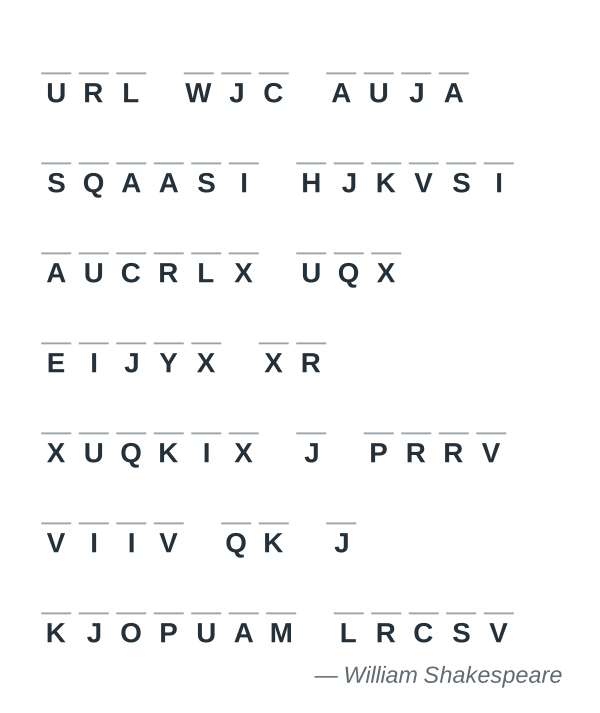
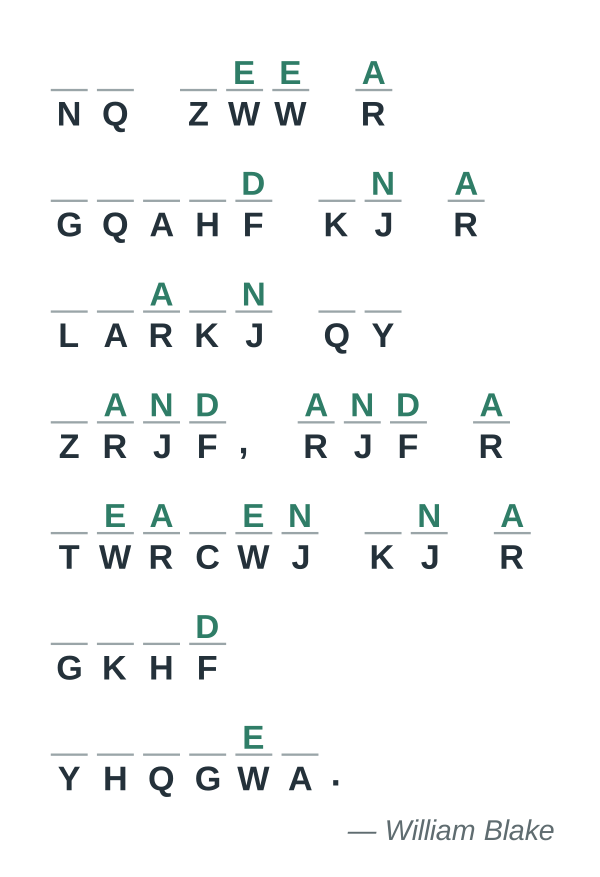
Cryptogram guide
How to play and solve cryptograms
A cryptogram is a quotation with every letter swapped for another. Below are the rules, a real sheet from this page solved step by step, the letters and words these quotes use most, and which sheet to print for whom.
How to play a cryptogram
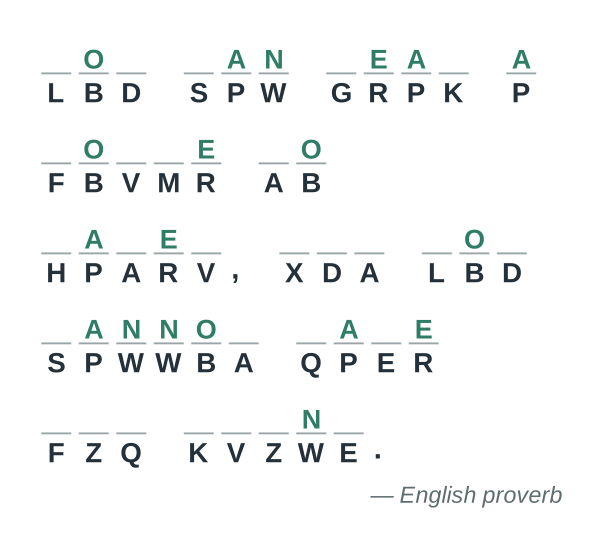
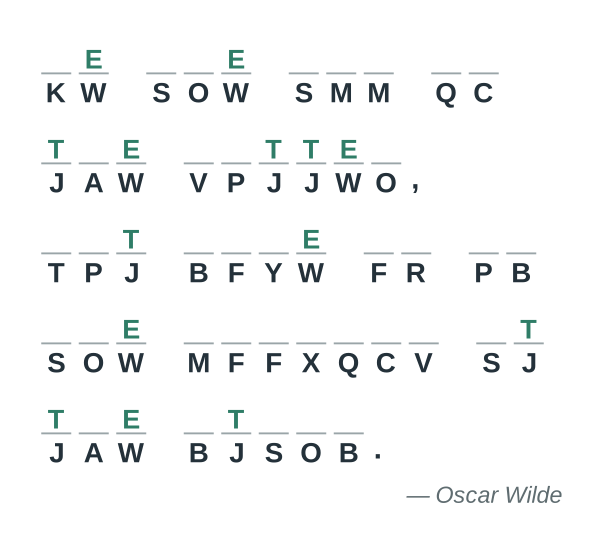
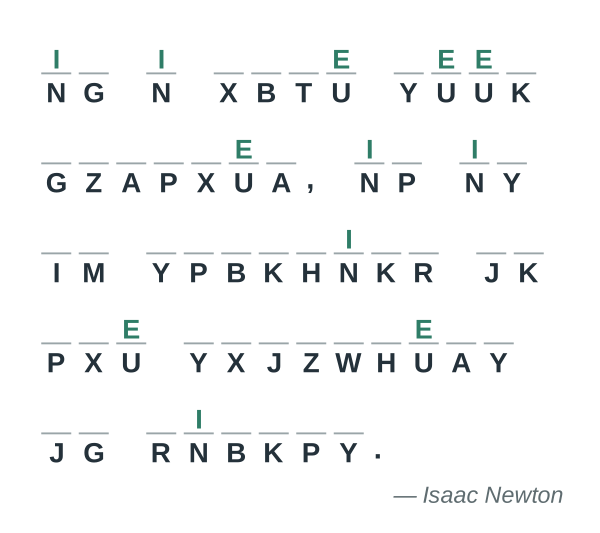
- Each letter in the quotation has been swapped for a different letter.
- The swap is the same all the way through: if R stands for E once, it stands for E everywhere.
- No letter stands for itself, and no two letters stand for the same one.
- Write the real letter on the line above each code letter. Letters already written in are free.
- You are done when the quotation reads. The author's name is printed under it.
A cryptogram made from a famous quotation is also called a cryptoquote. A cryptoquip is the same puzzle with a pun for the answer; this page makes cryptoquotes.
How to solve a cryptogram, step by step
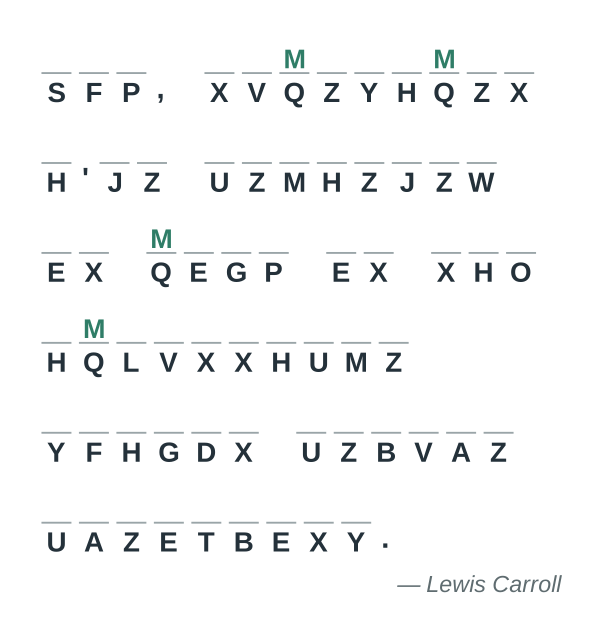
Most guides say to start with the short words. Start with the long ones instead, especially words with repeated letters: a long word's pattern of repeats often fits only one English word, while a short word fits hundreds. Here is a Medium sheet from this page. Every step was found by checking each word against 172,827 English words, built from the public-domain ENABLE word list, so each letter is certain, not a guess.
Step 1. LDEVLTECZTSK is 12 letters with repeats in exactly those places, and only one word in the list fits that pattern: PERSPIRATION. The given letters were not even needed. So L is P, E is R, V is S, T is I, C is A, Z is T and S is O.
Step 2. 832 words share the pattern of LDEODKZ, but with the letters already known only one fits: PERCENT. So O is C.
Step 3. 264 words share the pattern of KTKDZP, but with the letters already known only one fits: NINETY. So P is Y.
Step 4. 872 words share the pattern of CKR, but with the letters already known only one fits: AND. So R is D.
Step 5. 7,260 words share the pattern of ADKTHV, but with the letters already known only one fits: GENIUS. So A is G and H is U.
The first word to fall was PERSPIRATION, the longest on the sheet. AND only fell near the end: 872 words share its pattern. When nothing is certain, do what every solver does: try the commonest word that fits, write it in everywhere, and keep it until a word stops making sense.
When you are stuck
- A one-letter word is A or I. In these quotes A is the more common, 39 times to 21.
- A three-letter word is most often THE: 29% of the three-letter words in these quotes.
- Check the rules. A guess that makes a letter stand for itself, or gives two code letters the same answer, is wrong.
- Use the alphabet strip. Crossing off each answer letter as you use it shows what is left to choose from.
Cryptogram letter frequency and common words
Counted from the 88 quotations these puzzles are made from (5,202 letters, 1,286 words), not copied from a general table. E leads, but not on every sheet: it is the commonest letter, or tied for it, in 51 of the 88 quotes. On one short quotation the order wobbles, which is why patterns beat counting.
| Letter | E | T | O | A | N | I | S | R | H | L | D | W |
|---|---|---|---|---|---|---|---|---|---|---|---|---|
| Share | 13.1% | 9.8% | 8.7% | 7.6% | 7.1% | 7.0% | 6.4% | 6.1% | 5.7% | 3.7% | 3.3% | 2.7% |
Then, in order: U F M C G Y P B V K J Q X Z.
| Word length | Commonest words, with how many times each appears |
|---|---|
| 1 letter | A 39, I 21 (of 60) |
| 2 letters | TO 48, OF 46, IS 42, IN 28, IT 23 (of 289) |
| 3 letters | THE 81, AND 29, NOT 18, YOU 16, FOR 12 (of 280) |
| 4 letters | THAT 14, WITH 9, HAVE 8, KNOW 8, WHAT 8 (of 228) |
| Double letters | EE 23, SS 20, LL 19, OO 15, TT 12, FF 3 |
Cross letters off the alphabet strip as you go, and keep these in mind for the last few: a double letter here is most often EE, SS and LL, and Q, X and J barely appear at all.
Cryptogram difficulty levels: what changes
On many cryptogram sites a level is just a label. Here the level sets how many letters are given and which ones, and Expert also takes the punctuation away. The table measures what that leaves you to do: 56 builder sheets at each level, solved by the same word-pattern method as the steps above.
| Level | Letters given | Share of the sheet they fill | Punctuation marks | Logic alone fills | Letters left to try |
|---|---|---|---|---|---|
| Easy | 4 | 46% | 2.6 | 88% | 3.9 |
| Medium | 2 | 27% | 2.4 | 81% | 5.3 |
| Hard | 1 | 8% | 1.5 | 57% | 8.7 |
| Expert | 0 | 0% | 0.0 | 17% | 14.9 |
"Logic alone fills" is the share of the printed letters that are certain before you have to try a word. "Letters left to try" is how many different code letters are still open at that point.
On Easy, the given letters and word patterns fill about 88% of the sheet before you need to try anything, so the quotation is nearly readable. On Expert they fill 17%, and you start by trying likely words. Logic alone finished 19 of these 224 sheets, which is normal: almost every cryptogram needs a sensible try at some point. Expert drops the punctuation because a comma marks a phrase and an apostrophe followed by one letter is usually S or T.
Which cryptogram to print
| Who it is for | Settings | Why |
|---|---|---|
| First cryptogram, ages 9 to 11 | Proverbs and sayings, Easy, short quotes, alphabet strip on | Sayings they may already know, with four common letters in, so the first word comes quickly. |
| History or English class | Courage and change, Medium, name and date on, 2 per page | The quotation is the lesson, and the answer key gives the source to talk about afterward. |
| Seniors and large print | Nature and the seasons, Easy, large print, alphabet strip on, 1 per page | Large print widens the letter cells, so there is room to write, and gentle quotations read well aloud. |
| Adults and puzzle clubs | Mixed quotes, Expert, long quotes, encipher the author | Nothing given, no punctuation, and an enciphered author's name as a second small puzzle. |
| Substitute-teacher pack | Mixed quotes, Medium, 6 puzzles, 2 per page, rules page on | Three sheets of work with the method printed on the rules page, and a different code for every puzzle. |
| Something for a trip | Philosophy and wisdom, Hard, 4 puzzles, answer keys on | One given letter is enough to get started without making the sheet quick. |
- One per page gives the biggest letter cells; two per page suits short and medium quotes.
- The alphabet strip takes about half an inch. The builder warns when a long quote at two per page gets cramped.
- Every puzzle in a pack has its own code, so solving the first sheet does not give away the rest.
- New quotes draws again from the quotations that suit the level, so each press brings different quotes, not the same ones in a new code.
- Answer keys come after the puzzles, so they are easy to hold back. Each lists only the letters on its sheet.
Where the quotes come from
The bank holds 88 quotations: lines from 46 named authors, and 10 traditional proverbs, all out of copyright, with sources that can be checked. Lines that are widely quoted under the wrong name are left out. Because the text is free to give away, the terms of use let teachers, senior centers and families print and copy these sheets without asking. More on that in how we make puzzle packs.
| Category | Quotes | Who is in it | Suits |
|---|---|---|---|
| Proverbs and sayings | 16 | Benjamin Franklin and traditional proverbs | Ages 9 and up |
| Classic literature | 15 | Jane Austen, Charles Dickens, Mark Twain and others | Ages 12 and up |
| Philosophy and wisdom | 13 | Laozi, Marcus Aurelius, Seneca and others | Ages 13 and up |
| Science and discovery | 13 | Isaac Newton, Michael Faraday, Charles Darwin and others | Ages 12 and up |
| Courage and change | 15 | Frederick Douglass, Susan B. Anthony, Sojourner Truth and others | Ages 11 and up |
| Nature and the seasons | 16 | John Muir, Henry David Thoreau, Ralph Waldo Emerson and others | Ages 10 and up |
88 quotations is a small bank next to the printed collections. A six-puzzle pack never repeats a quote, but a class that uses this page every week will meet familiar lines.